
AI Writing Tools for Email Marketing
What are AI Writing Tools for Email Marketing?
AI writing tools for email marketing are specialized software solutions that leverage artificial intelligence to generate, optimize, and enhance email content. These tools help marketers create compelling messages while saving time and improving campaign performance.
Defining AI-powered email content generation
AI-powered email content generation uses machine learning algorithms to create email copy based on short prompts, keywords, or existing content. These tools analyze successful email patterns and language structures to produce relevant, engaging messages for marketing campaigns.
The core benefits for marketers
AI writing tools offer several key advantages for email marketers:
- Automatically generate catchy subject lines to improve email open rates
- Draft various email types including promotional, transactional, and newsletter content
- Personalize messages for large audience segments to enhance engagement
- Adjust tone and style to align with a brand’s specific voice
How AI transforms traditional email workflows
AI significantly speeds up the email drafting process, allowing marketers to produce more content faster. This transformation enables teams to focus on strategy and analysis rather than getting caught in the time-consuming process of writing every email from scratch.
My Take: AI writing tools for email marketing function best as augmentation rather than replacement, absorbing repetitive drafting tasks so teams can reallocate time toward segmentation, testing, and strategy while still applying editorial judgment at the end.
Key Features and Capabilities of AI Email Writers
Automated subject line generation for higher open rates
AI writing tools excel at creating compelling subject lines that can significantly improve email open rates. These tools analyze successful patterns and can generate multiple options for A/B testing to optimize performance.
Body copy creation for various email types
These platforms assist in drafting different types of email content, including promotional offers, transactional messages, and regular newsletters. AI can quickly generate complete drafts or provide suggestions to enhance existing copy.
Personalization at scale with dynamic content suggestions
AI enables marketers to personalize email messages for large audience segments without manually creating dozens of variations. The technology can suggest dynamic content elements based on user data, behavior patterns, and engagement history.
Tone and style adjustments to match brand voice
Modern AI writing tools can adjust the tone and style of email copy to align with a brand’s specific voice, whether professional, conversational, enthusiastic, or technical. This ensures consistency across all communications.
A/B testing suggestions for optimized performance
Some tools offer AI-powered suggestions for A/B testing variations to optimize email performance. These recommendations can help marketers identify which messaging approaches are most likely to resonate with their audience.
My Take: Across most implementations, the strongest contribution of AI writing tools for email marketing is in scalable personalization and fast variant generation, which makes systematic A/B testing and segmentation more practical even for lean teams.
Typical Use Cases and Workflows for Marketers
Streamlining content creation for drip campaigns
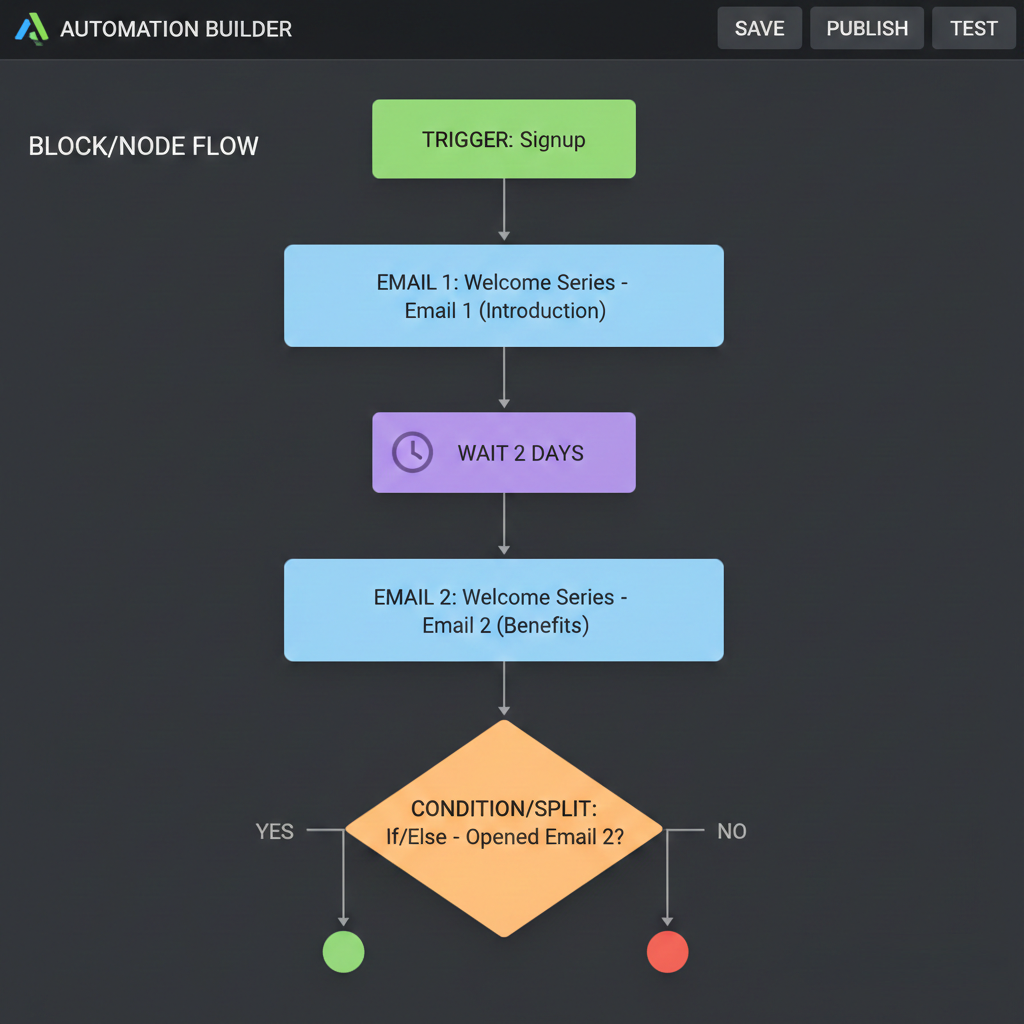
AI writing tools help streamline the creation of email drip campaigns and automated sequences. Marketers can quickly generate multiple related emails that maintain consistency while avoiding repetition throughout a nurture sequence.
Generating targeted emails for specific audience segments
These tools excel at creating variations of email content tailored to different audience segments. Marketers can generate specialized messaging for various customer personas, industries, or stages in the buyer journey.
Crafting engaging newsletters quickly
AI can rapidly transform content briefs or article summaries into newsletter format, making regular communication with subscribers more manageable. This allows marketing teams to maintain consistent publishing schedules without sacrificing quality.
Improving cold outreach and follow-up sequences
AI assists in crafting effective cold outreach emails and follow-up messages. The technology can suggest approaches that balance personalization with scalability, helping sales and marketing teams improve response rates.
Repurposing existing content into email format
Marketers can use AI to quickly iterate on different message angles or promotions for a single campaign. These tools excel at reformatting blog posts, product information, or other content into email-friendly structures.
My Take: For most marketing teams, AI writing tools for email marketing drive the clearest value in multi-email workflows like nurture series and follow-ups, where consistent structure matters more than one-off creative copy.
Choosing the Best AI Email Marketing Tool
Factors to consider: integration needs, ease of use, output quality
When selecting an AI writing tool for email marketing, consider how it will integrate with your existing email service provider and marketing stack. Evaluate the interface simplicity, learning curve, and most importantly, the quality and relevance of the content it produces.
Comparing features: personalization, content types, language support
Different AI tools excel in various areas. Some focus on personalization capabilities, others on specific content types like promotional emails or newsletters. For global campaigns, multi-language support is increasingly available in premium tools.
Scalability for growing marketing teams and campaigns
Consider how the tool will accommodate your growth. Evaluate factors like user seat pricing, content volume limitations, and whether the platform can handle increasingly complex campaign requirements as your marketing efforts expand.
My Take: When evaluating AI writing tools for email marketing, prioritizing integration depth and content quality usually leads to better long-term outcomes than choosing based on headline features or the lowest price point alone.
Limitations and Trade-offs of AI Email Content
The need for human oversight and editing
Human oversight and editing are crucial to ensure AI-generated content is accurate, on-brand, and free of errors. While AI can draft content quickly, marketing professionals must review and refine the output to maintain quality standards.
Potential for generic or repetitive content without proper guidance
Without specific prompts, AI-generated email content can sometimes be generic or lack unique insights. Marketers need to provide clear direction and context to avoid bland, undifferentiated messaging that fails to stand out in crowded inboxes.
Ethical considerations and data privacy
Using AI for personalized email marketing raises important questions about data usage and privacy. Organizations must ensure their practices comply with regulations like GDPR and CCPA while maintaining transparent communication with subscribers.
Understanding AI’s current inability to fully grasp complex human nuances
Despite rapid advances, AI still struggles with subtle humor, cultural references, and emotional intelligence. Certain messaging that requires deep empathy or nuanced understanding may still require significant human input.
My Take: For AI writing tools in email marketing, the main trade-off is speed versus nuance; teams gain rapid first drafts and scale but still need human review to preserve brand personality, handle sensitive topics, and manage compliance.
Integrating AI with Your Existing Email Marketing Stack
Common integrations with ESPs (Email Service Providers)
Many AI writing tools integrate with popular Email Service Providers and CRM platforms. These connections allow for seamless content transfer, enabling marketers to generate copy and deploy it without switching between multiple systems.
Workflow automation with CRM and marketing automation platforms
Beyond basic integrations, some AI writing tools can be incorporated into automated workflows. This allows for triggered content generation based on customer actions, data changes, or campaign schedules.
API access for custom solutions
Some AI writing platforms provide API access for custom integrations into proprietary marketing systems. This flexibility allows organizations with unique technical requirements to incorporate AI writing capabilities into their existing infrastructure.
My Take: Integrating AI writing tools for email marketing directly into ESPs, CRMs, and automation platforms tends to unlock the most value, as it reduces context switching and makes AI-generated content part of repeatable workflows rather than ad hoc usage.
The Future of AI in Email Marketing
Evolving capabilities: hyper-personalization, predictive content
The next generation of AI email tools will likely offer even more sophisticated personalization, potentially predicting optimal content based on individual recipient behavior and preferences. Recent trends indicate an increase in AI tools offering multi-language support for global email campaigns.
Impact on marketing team roles and productivity
As AI capabilities advance, marketing team structures will continue to evolve. Content creation roles may shift toward strategy, oversight, and optimization rather than production, while technical skills related to AI prompt engineering and system integration become increasingly valuable.
Staying ahead with emerging AI trends
The AI landscape is evolving rapidly, with new capabilities emerging regularly. Marketers should stay informed about advancements in natural language processing, personalization algorithms, and integration capabilities to maintain competitive advantage.
My Take: As AI writing tools for email marketing mature, teams that build processes around experimentation, measurement, and governance will be better positioned than those that adopt tools casually or without clear objectives.
Pricing snapshot: AI writing tools for email marketing
Quick comparison of entry price points and whether a free plan exists, based on the tools mentioned in this guide.
| Tool | Starting price | Free plan | Best for | Notes |
|---|---|---|---|---|
| Jasper AI | $49/mo | No | Brand voice consistency + team workflows | Works best when you maintain a style guide and review pass. |
| Copy.ai | $29/mo | Yes | Fast variants for nurture and outbound | Good “draft-to-iterate” tool for lean teams. |
| Writesonic | $39/mo | Yes | High-volume drafting + testing | Useful when you need many angles quickly for A/B tests. |
| Surfer AI | $99/mo | No | Teams repurposing SEO content into email | Stronger fit when email supports a broader content engine. |
| ActiveCampaign | $15/mo | No | Automation-first email programs | Value increases with segmentation + behavioral triggers. |
| Mailmeteor | $4.99/mo | Yes | Simple outreach and follow-ups (small teams) | Great ROI for templated sends and lightweight personalization. |
Tip: Before publishing, re-check plan pages for updated pricing/limits (especially seats, credits, and annual vs monthly billing).
Pricing Plans
Below is the current pricing overview for the tools mentioned above:
- Jasper AI: $49/mo, No Free Plan
- Copy.ai: $29/mo, Free Plan Available
- Writesonic: $39/mo, Free Plan Available
- Surfer AI: $99/mo, No Free Plan
- ActiveCampaign: $15/mo, No Free Plan
- Mailmeteor: $4.99/mo, Free Plan Available
Value for Money
When evaluating AI writing tools for email marketing, value should be assessed relative to specific use cases rather than raw pricing alone. Entry-level options like Mailmeteor offer excellent value for small businesses or individual marketers with basic needs, providing core functionality at accessible price points. These tools typically deliver the highest ROI for organizations sending regular, templated communications.
Mid-range solutions like Copy.ai and Writesonic represent strong value for growing marketing teams that require more sophisticated content generation capabilities. Their balance of advanced features and reasonable pricing makes them particularly suitable for companies scaling their email marketing efforts. For enterprise-level organizations with complex requirements, premium tools like Jasper AI and Surfer AI justify their higher investment through advanced personalization, integration capabilities, and support for multi-channel content strategies.
How I’d Use It
I use AI writing tools for email marketing primarily as a fast drafting and variation engine, not as a final decision-maker. The goal is to remove friction from writing while keeping strategic control.
First, I clearly define the email’s purpose and audience before generating anything. For example, whether the email is meant to activate a new user, re-engage a cold subscriber, or follow up after a trial signup. This single line of intent becomes the anchor for all AI outputs.
Next, I ask the AI to generate multiple subject line options—usually 8 to 12—using different angles such as curiosity, benefit-driven framing, or urgency. From these, I manually select two candidates that feel brand-safe and suitable for A/B testing.
For the body copy, I generate two structural variants rather than many small rewrites. One version is concise and direct, while the other uses light storytelling or social proof. Both lead to the same CTA, which makes performance comparison cleaner.
Personalization is added carefully. I only use data points I actually have—such as first name, company, or last action—and avoid speculative personalization that could feel invasive or inaccurate.
Before sending, every AI-generated email goes through a human review pass. This includes tone alignment, factual accuracy, compliance language, unsubscribe clarity, and a quick mobile preview. Once sent, performance data feeds back into the next prompt so the AI improves as part of a closed loop rather than one-off usage.
In practice, this approach turns AI into a repeatable system for drafting, testing, and iterating emails—while final judgment stays firmly human.

Editor’s Summary
AI writing tools for email marketing accelerate content creation while enabling more consistent personalization, testing, and sequencing across campaigns. They are particularly effective for subject lines, structured body copy, and multi-email workflows, though human oversight remains essential for brand voice, nuance, and compliance. Smaller teams gain leverage from entry-level tools, while larger organizations benefit from deeper integrations and advanced features. As these tools continue to evolve, marketers who embed them into integrated, measurable workflows will see the strongest and most sustainable gains.