
Are you spending more time searching for the right AI tool than actually preparing lessons? Most educators waste hours comparing platforms that either do too much or too little, shifting the burden from one task to another without real relief. This article helps you decide whether MagicSchool AI or Diffit fits your specific teaching needs in 2026, so you can stop evaluating and start teaching.

⚡ Quick Verdict
✅ Best For: MagicSchool AI suits generalist K-12 educators managing multiple subjects and administrative tasks; Diffit serves literacy specialists and special educators focused on reading differentiation.
⛔ Skip If: You need deep specialization in a single domain (skip MagicSchool AI) or comprehensive lesson planning beyond text adaptation (skip Diffit).
💡 Bottom Line: Choose MagicSchool AI for breadth across classroom tasks or Diffit for focused literacy support—not both unless your role demands it.
Why AI Education Tools Matter for 2026
Educational technology continues to shift from administrative convenience to direct instructional impact. Teachers face increasing pressure to personalize learning while managing larger class sizes and diverse student needs. AI tools now address both workload reduction and differentiation simultaneously, making them essential rather than optional for many educators.
The demand for personalized learning at scale has outpaced traditional methods. AI-driven platforms can adapt content, generate assessments, and differentiate instruction faster than manual approaches, allowing educators to focus on student interaction rather than material preparation. This shift matters because time spent on preparation directly competes with time spent on teaching.
What MagicSchool AI and Diffit Actually Solve
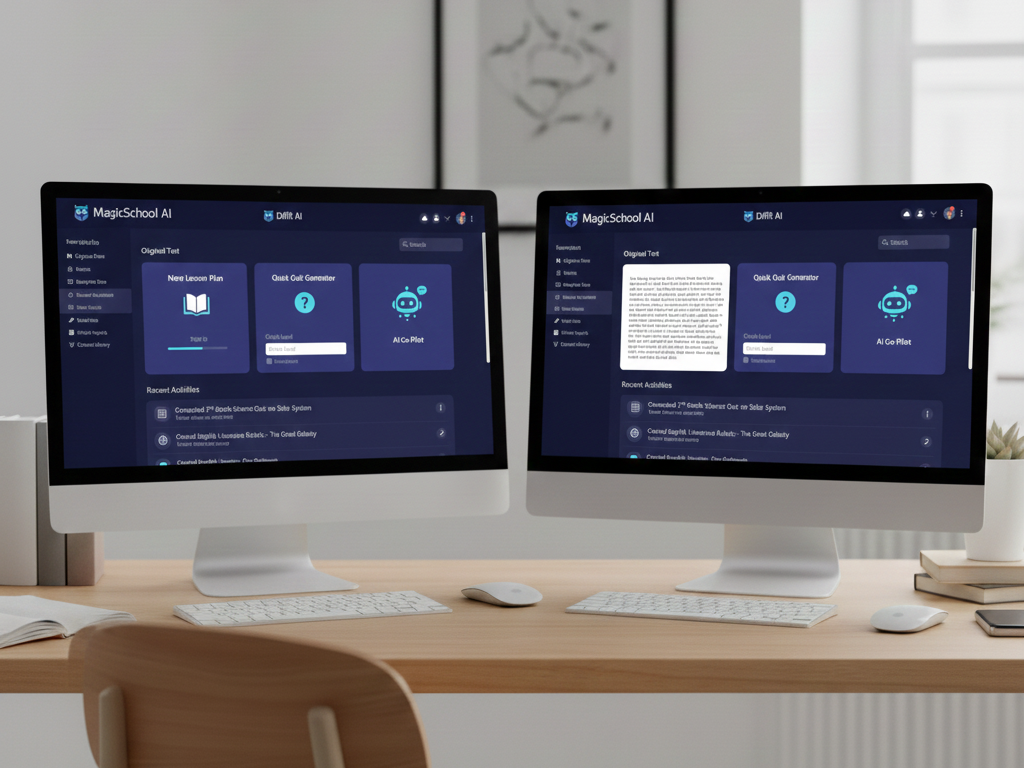
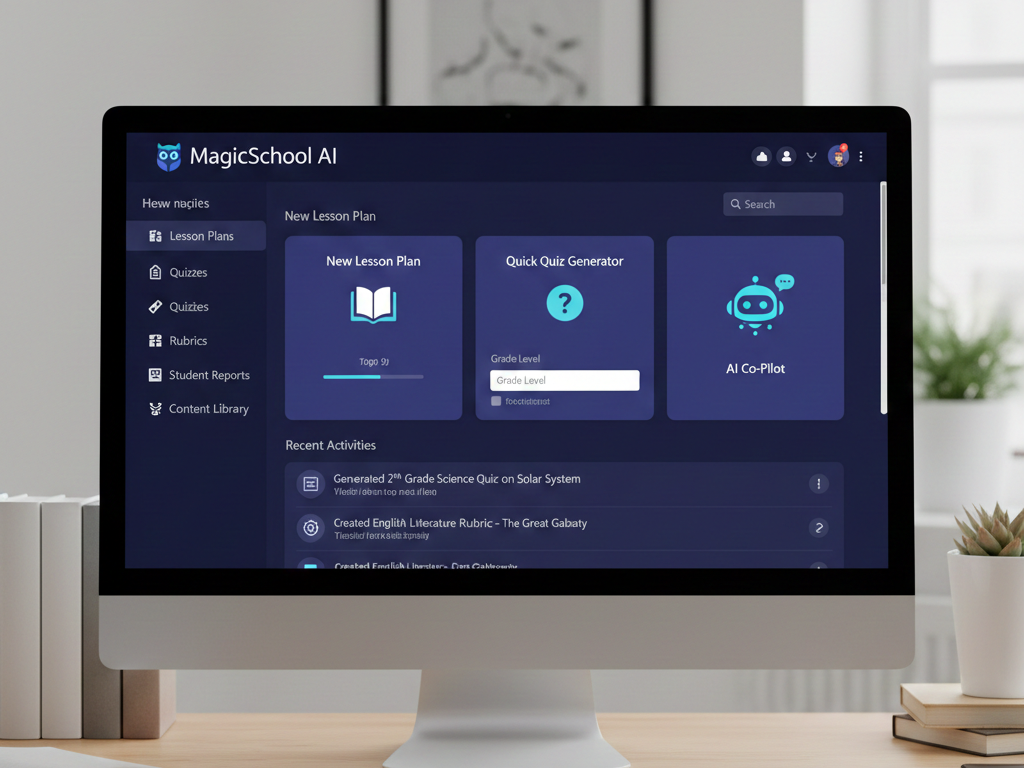
MagicSchool AI functions as a comprehensive classroom assistant designed for K-12 educators seeking to enhance classroom efficiency across multiple tasks. It offers a wide array of tools for lesson planning, rubric generation, and quiz creation, while also helping streamline administrative tasks like writing parent communications or student reports. The platform includes tools for differentiating instruction and adapting content for various student needs across diverse subjects and grade levels.
⛔ Dealbreaker: Skip MagicSchool AI if you need highly specialized tools for a single instructional domain, as its broad scope means some individual tools are less specialized than dedicated single-purpose alternatives.
Diffit specializes in content differentiation and literacy support. It automatically adapts reading content to different comprehension levels, generates summaries, vocabulary lists, and comprehension questions from existing articles or texts. This enables rapid differentiation of instructional materials for literacy and reading comprehension, making complex texts accessible to students with varying reading abilities, including English language learners.
⛔ Dealbreaker: Skip Diffit if you need general lesson planning or rubric creation capabilities, as its primary focus on text adaptation makes it less versatile for broader classroom needs.
Who Should Seriously Consider Each Tool
MagicSchool AI serves generalist educators who manage multiple subjects, grade levels, or administrative responsibilities. If your role requires creating diverse materials—from science quizzes to parent emails to differentiated math worksheets—the platform’s breadth reduces the need to switch between multiple tools. Teachers in self-contained classrooms or those covering multiple preparations benefit most from this consolidated approach.
Diffit targets literacy specialists, special education teachers, and educators supporting diverse reading levels. If your primary instructional challenge involves making texts accessible to students reading below, at, or above grade level, Diffit’s focused power delivers immediate results. English language arts teachers, reading interventionists, and inclusion specialists find the most value in its specialized capabilities.
- Choose MagicSchool AI when your role demands versatility across instructional and administrative tasks
- Choose Diffit when literacy differentiation represents your core instructional challenge
- Match tool capabilities to the frequency and importance of specific tasks in your daily workflow

Who Should NOT Use This
MagicSchool AI becomes inefficient when you need deep functionality in a single area. If you teach only one subject and require advanced features specific to that discipline—such as complex STEM simulations or advanced language analysis—dedicated tools will serve you better. The platform’s broad utility means individual features lack the depth specialists require.
Diffit’s specialization limits its value outside literacy instruction. If you need to create rubrics, plan interdisciplinary units, or generate materials for non-text-based subjects like mathematics or physical education, Diffit cannot replace a more comprehensive tool. Teachers who spend minimal time on reading differentiation will find the platform underutilized.
Both tools assume reliable internet access and basic digital literacy. Schools with limited connectivity or educators uncomfortable with AI-generated content requiring human review should consider whether implementation barriers outweigh potential benefits.
MagicSchool AI vs Diffit: When Each Option Makes Sense
The fundamental difference lies in scope versus specialization. MagicSchool AI assists educators in generating materials for diverse subjects and grade levels, while Diffit concentrates exclusively on adapting reading content to different comprehension levels. This distinction determines which tool fits specific teaching roles and student demographics.
⚔️ Feature Showdown
MagicSchool AI
- ✅ All-in-One: Lesson plans, rubrics, & IEPs.
- ✅ Broad Scope: Covers all K-12 subjects.
- ❌ Depth: Less specialized for reading leveling.
Diffit
- ✅ Literacy Expert: Best for reading differentiation.
- ✅ Deep Context: Vocabulary & questions included.
- ❌ Limited Scope: Not for general admin tasks.
MagicSchool AI excels when you need to produce varied instructional materials quickly. Creating a differentiated science lesson, generating a rubric for a writing assignment, and drafting a parent communication about classroom behavior all fall within its capabilities. The platform supports the export of generated content for use in other platforms like Google Docs or Microsoft Word, maintaining workflow continuity with existing systems.
Diffit wins when text accessibility represents your primary instructional barrier. A single article can be adapted to three reading levels, complete with vocabulary support and comprehension questions, in minutes. Diffit allows users to easily copy and paste adapted content into various learning management systems or other digital documents, making it simple to integrate into existing lesson structures.
💡 Rapid Verdict:
Best for educators who can clearly identify whether breadth or depth solves their specific instructional challenge, but SKIP THIS if you need both comprehensive planning tools and deep literacy specialization—no single platform currently delivers both at the level specialists require.
🗣️ Community Whisper (Real User Feedback)
“While MagicSchool AI is praised for saving hours on email drafting, some power users note that its creative writing prompts can feel a bit generic compared to custom GPT-4 prompts. For Diffit, the main complaint is the current lack of math-specific differentiation features beyond word problems.”
— Based on educator discussions in 2025
Key Risks or Limitations to Consider
Both platforms require human oversight of AI-generated content. Educators must review materials for accuracy, appropriateness, and alignment with learning objectives before classroom use. This review step reduces but does not eliminate preparation time, and the quality of outputs depends significantly on the specificity of user inputs.
Adoption challenges vary by educator comfort with technology and institutional support. Teachers unfamiliar with AI tools face a learning curve that temporarily increases workload before efficiency gains materialize. Schools should plan for training time and ongoing support rather than expecting immediate productivity improvements.
- AI-generated content requires verification against curriculum standards and factual accuracy
- Initial time investment in learning platform features precedes long-term time savings
- Effectiveness depends on clear, specific prompts and requests from educators
- Long-term platform support and feature development remain uncertain in a rapidly evolving market
🚨 How I’d Use It: The Panic Test (10 Mins Before Class)
Scenario: It’s Monday morning, 07:50 AM. First period starts at 08:00 AM. I just realized the science news article I planned to distribute is far too complex for my 5th graders, and I have zero backup materials.
Here is exactly how I would handle this “emergency” using these tools:
- ⏰ 07:51 AM (The Decision):
My goal is text accessibility, not a full lesson plan. So, I skip MagicSchool AI and immediately open Diffit. - ⏰ 07:53 AM (The Action):
I paste the URL of the complex article into Diffit. I select “5th Grade Reading Level” and hit “Generate Resources.” I don’t waste time tweaking settings. - ⏰ 07:56 AM (The Review):
Diffit spits out the simplified text, a vocabulary list, and 3 multiple-choice questions. I quickly scan the definitions. One definition seems a bit off, so I manually edit it. (Never trust AI 100% blindly!) - ⏰ 07:59 AM (The Finish):
I click “Export to PDF” and hit print. As the students walk in at 08:00 AM, the warm handouts are waiting.
The Takeaway: If I needed to write an email to a parent about a behavioral issue in this same 10-minute window, I would have chosen MagicSchool AI. But for saving a lesson from reading-level disaster? Diffit wins the panic test.
Pricing Plans
Below is the current pricing overview:
- MagicSchool AI: Free plan available; paid plans start at $12.99/month
- Diffit: Free plan available; paid plans start at $14.99/month
- Brisk: Free plan available; pricing for premium features not publicly listed
- SchoolAI: Free plan available starting at $0/month
- TeacherMade: Free plan available; pricing for premium features not publicly listed
- Monsha.ai: Free plan available; paid plans start at $20/seat/month
Value for Money
For individual educators or small teams, both MagicSchool AI and Diffit offer accessible entry points through free plans that allow testing before financial commitment. The paid tiers at roughly $13-15 per month represent reasonable investments if the tools save even two hours of preparation time monthly, assuming educators value their time at standard professional rates. The key question is frequency of use—daily users justify the cost easily, while occasional users may find free plans sufficient.
Schools considering site licenses or district-wide adoption face different calculations. MagicSchool AI’s broader feature set may reduce the need for multiple specialized tools, potentially lowering total technology spending. Diffit’s focused functionality makes it easier to measure impact on specific literacy outcomes, which matters for budget justification and program evaluation. Districts should pilot both tools with representative teacher groups before committing to large-scale purchases.
The value proposition shifts based on existing technology infrastructure. Schools already paying for comprehensive learning management systems or content libraries may find overlap with MagicSchool AI’s features, reducing incremental value. Conversely, schools lacking robust differentiation tools may find Diffit fills a critical gap that existing platforms ignore. Neither tool eliminates the need for educator judgment, so value depends on whether time savings translate to improved instruction rather than simply faster material production.

Final Verdict
- ✅ Buy this if: You’re a K-12 generalist educator managing multiple subjects and need consolidated material generation (MagicSchool AI), or you’re a literacy specialist requiring daily text differentiation for diverse reading levels (Diffit).
- ⛔ Skip this if: You need both comprehensive cross-subject planning and deep literacy specialization—neither tool delivers both at the level required for dual-focus roles.
- 👀 Best Alternative: If you need features from both platforms, consider Brisk for broader functionality or evaluate whether combining free tiers of both tools serves your needs before paying for either.
The Practical Call: Where This Tool Actually Fits
MagicSchool AI competes directly against manual lesson planning and administrative writing, not against other AI tools. Its value emerges when you compare time spent creating materials from scratch versus reviewing and refining AI-generated drafts. Teachers who already use templates and reusable resources may find smaller gains than those starting each task with a blank document.
Diffit’s specialization helps when text complexity represents a consistent barrier to student access. If you regularly simplify articles, create vocabulary supports, or write comprehension questions for multiple reading levels, Diffit’s focused power justifies adoption. However, if differentiation needs extend beyond literacy—into math problem complexity, science lab modifications, or project scaffolding—Diffit’s narrow scope limits its utility.
Usage frequency determines whether either tool makes sense. Daily users of specific features—whether lesson planning or text adaptation—see compounding time savings that justify subscription costs and learning curves. Occasional users often find free plans adequate or discover that the overhead of remembering platform-specific workflows exceeds benefits. Neither tool addresses compliance or institutional risk factors directly, though both require educators to verify content accuracy and appropriateness before classroom use, maintaining professional responsibility for instructional quality.

Who This Is (and Isn’t) For
Best for: K-12 educators who can clearly identify whether their primary time constraint involves creating diverse materials across subjects (MagicSchool AI) or adapting texts for varied reading levels (Diffit), and who will use the chosen tool at least three times weekly.
Not for: Educators seeking a single platform that handles both comprehensive lesson planning and specialized literacy differentiation at expert levels, or those who need advanced subject-specific features beyond general content generation and text adaptation.
Summary: Choose based on your most frequent, time-consuming task—breadth for generalists, depth for literacy specialists—and accept that no current tool eliminates the need for professional judgment in reviewing and refining AI-generated educational content.