
AI Logo Generator vs Hiring a Designer
Introduction: The Logo Dilemma in the Digital Age
In today’s rapidly evolving digital landscape, creating a compelling brand identity has never been more important. The logo, as the visual cornerstone of any brand, demands careful consideration. Business owners and marketers now face a critical choice: leverage the speed and accessibility of AI logo generators or invest in the expertise and personalized approach of a professional designer.
This decision extends beyond mere aesthetics. Your logo represents your brand’s values, mission, and personality in a single visual element. Whether you choose artificial intelligence or human creativity will significantly impact how your brand communicates with your audience and stands out in the marketplace.
Insight: Framing the choice between an AI logo generator and hiring a designer as a strategic brand decision helps clarify that the logo influences positioning, perception, and long-term recognition rather than acting as a purely decorative asset.
Understanding AI Logo Generators: Speed and Simplicity
Core Features and Capabilities of AI tools
AI logo generators have revolutionized the design landscape by offering instant logo creation based on simple user inputs. These platforms provide immediate options after collecting information about your industry, preferred style, and relevant keywords. Most AI tools include basic customization features for adjusting colors, fonts, and icon variations to better match your vision.
Recent technological advancements have notably improved both the quality and variety of AI-generated logo suggestions. Many AI logo generators now integrate with broader brand kit tools or website builders, creating a more comprehensive branding solution.
Typical Use Cases for AI-generated logos
AI logo generators excel in specific scenarios:
- Quick mockups and concept testing
- Personal projects with limited budgets
- Initial brand idea exploration
- Entrepreneurs and small businesses with resource constraints
Limitations and Trade-offs of AI in design
Despite their convenience, AI logo generators come with notable limitations. AI-generated logos often lack true uniqueness, sometimes appearing generic or template-based. More critically, these tools typically cannot offer the deep conceptualization or strategic brand alignment that comes from human design expertise. The algorithms prioritize visual appeal but may miss the nuanced storytelling that makes a brand truly memorable.
Insight: AI logo generators deliver their greatest value through accessibility and speed, providing viable design options in minutes rather than days. However, this efficiency comes at the cost of strategic depth and originality. The technology excels at pattern recognition and implementation of design principles but lacks the contextual understanding needed to create truly distinctive brand identities that resonate on multiple levels.
The Value of a Human Designer: Craftsmanship and Strategy
What a Professional Designer Brings to the Table
Professional designers offer far more than technical skill—they bring strategic thinking and brand development expertise. When hiring a designer, you gain access to in-depth conceptualization, market research, and strategic brand positioning. The design process involves personalized feedback loops and iterative revisions, ensuring your logo perfectly captures your brand essence.
Beyond the logo itself, professional designers typically deliver comprehensive brand guidelines, ensuring consistency across all touchpoints from business cards to billboards. This holistic approach creates a cohesive visual identity that can grow with your business.
Scenarios Where a Human Designer Excels
Human designers provide exceptional value for:
- Established businesses seeking brand evolution
- Companies needing strong market differentiation
- Brands with complex identity requirements
- Organizations requiring a distinctive visual identity that resonates deeply with specific target audiences
Potential Considerations When Hiring a Designer
While professional design offers numerous advantages, it typically requires more time for collaboration and multiple rounds of refinement. This process, while valuable, demands patience and clear communication to achieve optimal results. The investment extends beyond financial considerations to include time and engagement throughout the creative journey.
Insight: Human designers differentiate themselves through their ability to translate abstract brand values into visual storytelling. The collaborative process creates logos with strategic depth that communicate on both conscious and subconscious levels. This investment in expertise yields designs with longevity and adaptability, capable of evolving alongside growing businesses rather than requiring complete replacement as needs change.
Key Differences: Creativity, Customization, and Brand Impact
Uniqueness and Originality of Design
The fundamental difference between AI and human design lies in originality. AI tools analyze existing design patterns and recombine elements, creating logos that follow established conventions. Human designers, conversely, can break conventions intentionally, creating truly distinctive visual identities that stand apart from competitors.
Adaptability and Scalability for Future Growth
Professional designers consider how a logo will function across different mediums and contexts—from tiny mobile icons to large-scale signage. They anticipate future brand extensions and ensure the design remains effective as your business evolves. AI tools typically focus on the immediate application without this forward-thinking perspective.
Strategic Depth and Storytelling Capabilities
Perhaps the most significant distinction is in storytelling capacity. Human designers infuse logos with meaningful symbolism and visual narratives that connect with audiences on emotional levels. AI-generated logos may look professional but often lack this deeper resonance that builds lasting brand connections.
Insight: The gap between AI and human design is most apparent in the dimension of intentionality. Human designers make deliberate choices informed by strategic objectives and cultural context, while AI systems optimize for visual appeal based on pattern recognition. This distinction becomes increasingly important for brands competing in crowded marketplaces where subtle differentiation drives consumer perception and loyalty.
Who Should Choose What? Matching Needs to Solutions
Best for Startups and Budget-Conscious Ventures
AI logo generators offer compelling advantages for early-stage ventures with limited resources. They provide professional-looking options quickly and affordably, allowing new businesses to establish a visual presence without significant investment. For pre-launch testing or minimum viable products, AI tools offer sufficient quality to begin building brand recognition.
Best for Established Brands and Complex Identities
Established businesses, particularly those in competitive industries, benefit substantially from professional design. When your brand needs to communicate complex values or distinguish itself in saturated markets, human designers provide the strategic thinking and creative originality necessary for meaningful differentiation.
Factors to consider: time, resources, brand vision
Your decision should account for timeline requirements, available budget, and long-term brand aspirations. Consider whether your logo needs to serve primarily as functional identification or as a strategic asset that builds emotional connections with your audience.
Insight: Aligning the choice between an AI logo generator and hiring a designer with budget, risk tolerance, and growth stage helps ensure that early experiments remain cost-effective while mature brands invest in deeper differentiation where it has greater impact.
Hybrid Approaches: Leveraging Both Worlds
Using AI for Initial Inspiration, Designer for Refinement
Many businesses now adopt hybrid approaches, using AI tools to generate initial concepts that professional designers then refine and elevate. This methodology combines the exploratory efficiency of AI with the strategic expertise of human designers, often resulting in more efficient creative processes.
Integrating AI Tools within a Designer-Led Process
Forward-thinking designers increasingly incorporate AI tools into their workflows, using them to accelerate certain aspects of the design process while focusing their expertise on strategic elements. This integration allows for more cost-effective design services without sacrificing quality or originality.
Insight: Hybrid approaches represent the emerging best practice for organizations seeking balance between efficiency and quality. By strategically deploying both AI and human creativity at different stages of the design process, businesses can optimize resource allocation while still achieving distinctive brand identities. This collaborative model leverages technology as an enhancement to human creativity rather than a replacement.
Making Your Decision: A Framework for Success
Assessing Your Brand’s Needs and Long-Term Goals
Before choosing between AI and human design, conduct a thorough assessment of your brand’s positioning, competitive landscape, and growth trajectory. Consider how your logo will function across different touchpoints and how it integrates with your overall marketing strategy. This evaluation provides crucial context for making an informed decision.
Prioritizing Uniqueness vs. Speed
The central question often comes down to whether differentiation or efficiency matters more for your specific situation. If standing out visually from competitors is critical to your business model, human design likely offers better value despite higher investment. If rapid deployment and cost control are paramount, AI tools provide a practical solution.
Insight: Treating the choice between an AI logo generator and hiring a designer as a trade-off between speed, cost, and distinctiveness enables a structured decision, where each option is mapped to specific business objectives and risk levels.
Conclusion: The Future of Logo Design
Balancing efficiency with authentic brand expression
As AI technology continues to advance, the line between automated and human design will likely blur further. However, the fundamental need for authentic brand expression remains constant. The most successful approaches will likely combine technological efficiency with human strategic insight, creating logos that are both practical to implement and meaningful to audiences.
Whether you choose AI generation, professional design, or a hybrid approach, the most important factor is alignment with your brand’s unique needs and aspirations. By making this decision thoughtfully, you ensure your logo serves as an effective ambassador for your brand in an increasingly visual marketplace.
Insight: Over time, the most resilient brands are likely to be those that pair the scalable efficiency of AI logo tools with the nuanced guidance of human designers, ensuring that rapid production never comes at the expense of coherent, authentic brand expression.
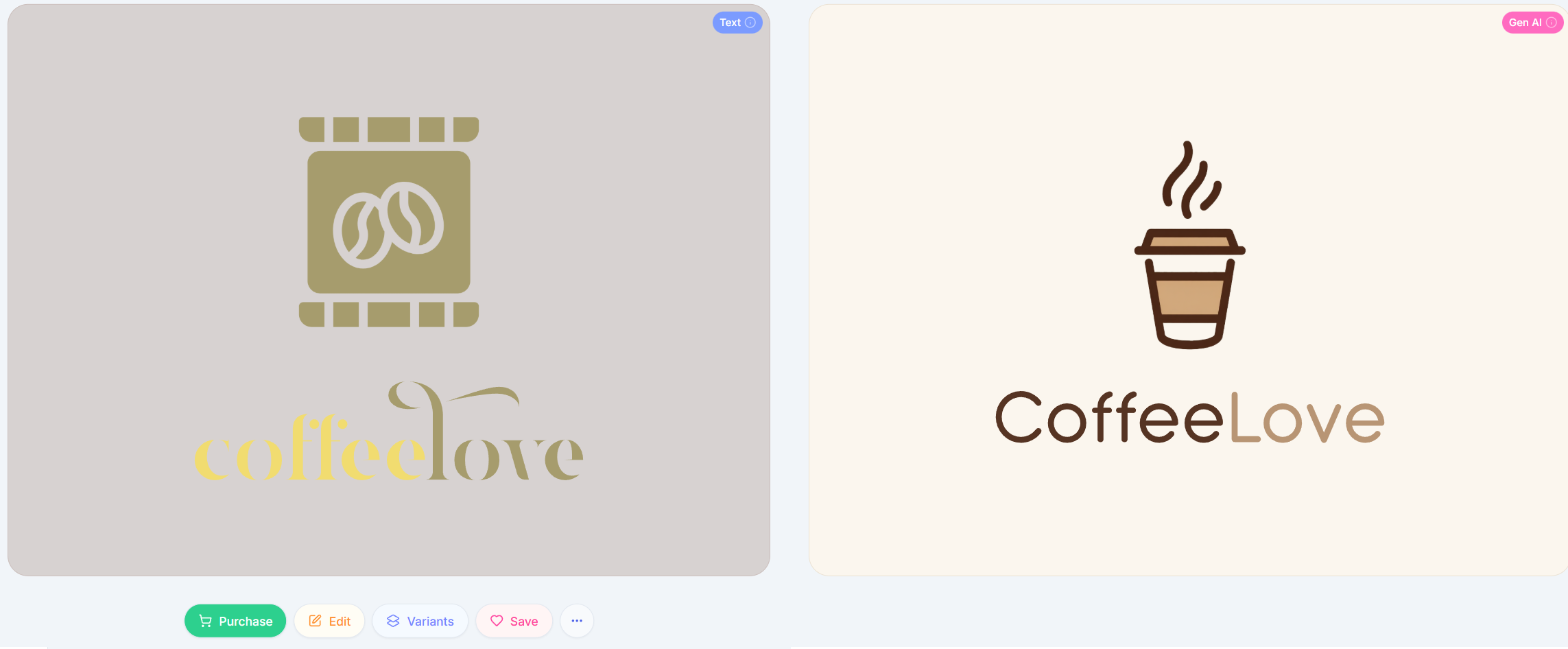
How I’d Use It: The “Hybrid” Branding Strategy
How I’d Use It: The “Hybrid” Branding Strategy
If I were launching a startup today with a tight budget but big dreams, I wouldn’t choose just one side. I would use both.
Here is my smart workflow:
-
Phase 1 (Brainstorming with AI): First, I would use Looka or Brandmark to generate 50 different logo ideas in 10 minutes. This helps me find my “Taste” without spending a dime.
-
Phase 2 (The Professional Touch): Once I pick my favorite AI concept, I wouldn’t just use it as is. I would take that design to a human designer on Fiverr or Upwork and say, “Please refine this AI draft and fix the typography.”
Bottom line: This saves me weeks of “I don’t know what I want” meetings with designers, while still getting a professional, polished logo that doesn’t look like a generic template.
Pricing Plans
Below is the current pricing overview for the tools mentioned above:
- Looka: $20/mo, Free Plan Available
- Tailor Brands: Free Plan Available
- Brandmark: No Free Plan
- LogoAI: $15.9/mo, Free Plan Available
- Canva Logo Maker: $12.99/mo, Free Plan Available
Value for Money
When comparing an AI logo generator vs hiring a designer, value for money depends on how central the logo is to your competitive edge. AI platforms typically offer low upfront costs and subscription tiers, making them attractive when cash flow is tight and the goal is to launch quickly with a solid, if not highly distinctive, visual identity.
Hiring a designer usually involves a higher one-time investment, but that cost often includes research, strategy, and brand guidelines that reduce redesign risk later. For brands that expect to scale, the additional upfront spend can be more economical over time than repeatedly replacing or upgrading a generic AI-generated mark.
When evaluating value relative to investment, Canva Logo Maker stands out for offering the most comprehensive ecosystem at the lowest starting price point. Its integration with a complete design platform provides additional utility beyond logo creation, making it particularly appealing for small businesses needing various marketing materials.
LogoAI delivers strong value through its balance of advanced AI capabilities and reasonable pricing structure. For businesses focused specifically on logo creation rather than broader design needs, this platform offers sophisticated generation features without unnecessary add-ons that inflate costs.
For entrepreneurs seeking comprehensive brand identity packages rather than just logos, Looka provides compelling value despite its slightly higher entry point. The platform’s ability to extend logo designs across multiple brand applications creates consistency that justifies the premium for businesses planning immediate brand deployment across various channels.
Editor’s Summary
AI logo generators provide fast, low-cost access to acceptable designs, making them suitable for early-stage brands, personal projects, and quick experiments. Hiring a designer introduces strategy, research, and tailored storytelling that better serve complex or competitive brands. For many organizations, the most effective route is a hybrid model that uses AI for exploration and a designer for refinement, aligning the balance of speed, budget, and distinctiveness with overall business goals.