
AI powered tools for identifying content gaps
What Are AI-Powered Content Gap Analysis Tools?
Content gap analysis tools powered by artificial intelligence have revolutionized how digital marketers identify opportunities in their content strategy. These sophisticated platforms leverage advanced algorithms to pinpoint areas where your content is missing compared to competitors or market demands.
Defining content gaps in the digital landscape
Content gaps represent the topics, keywords, or questions that your audience is searching for, but your website doesn’t adequately address. These gaps create opportunities for competitors to capture traffic and engagement that could otherwise be directed to your site.
How AI transforms traditional content gap analysis
AI-powered tools automate the identification of content gaps by analyzing competitor content and market trends. They leverage Natural Language Processing (NLP) to understand the semantic context and relevance of topics, transforming what was once a manual, time-consuming process into an efficient, data-driven strategy.
The strategic importance for SEO and content marketing
Identifying content gaps is crucial for maintaining competitive advantage in organic search. Marketers use these tools to uncover untapped keyword opportunities and topics that competitors rank for but their own site doesn’t, allowing for strategic content development that directly addresses audience needs.
My Take:
AI content gap analysis tools represent a significant evolution from traditional keyword research methods. The market has clearly shifted toward comprehensive semantic analysis rather than simple keyword matching. These tools excel at uncovering nuanced content opportunities that would be nearly impossible to identify manually, making them essential for serious content strategists in competitive niches.
Key Features and Capabilities of AI Content Gap Tools
AI-driven competitive content analysis
These tools can perform comprehensive competitor analysis, comparing content performance across multiple domains. Users typically input target keywords, competitor URLs, or existing content to initiate a gap analysis, providing immediate insights into competitive content landscapes.
Keyword and topic gap identification
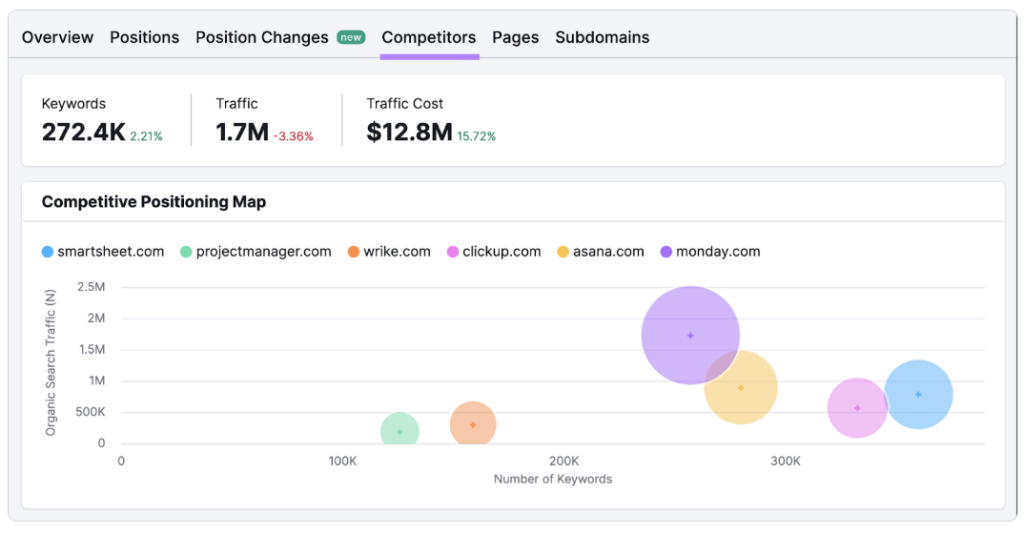
At their core, these platforms identify keywords and topics where competitors are ranking but your site isn’t. Some tools offer visual representations of content gaps, making it easier to spot opportunities at a glance.
Semantic analysis and topic clustering
Advanced AI tools go beyond keywords to understand related concepts, creating topic clusters that help build comprehensive content strategies. This semantic understanding ensures content addresses not just primary keywords but the entire subject ecosystem.
Audience intent mapping and question discovery
The analysis often includes identifying questions users ask that are not adequately answered by existing content. This intent-focused approach ensures content creation aligns with actual user needs.
Content brief generation and optimization suggestions
Many platforms can generate detailed content briefs, including suggested headings, keywords, and questions to address. These actionable recommendations streamline the content creation process.
My Take:
The most valuable feature across these platforms is their ability to connect keyword gaps with actionable content recommendations. Market consensus indicates that tools offering semantic clustering and intent analysis provide significantly more strategic value than those focused solely on keyword identification. Users typically report the greatest ROI from platforms that seamlessly bridge the gap between analysis and implementation.
Who Benefits Most: Target Audiences and Use Cases
For SEO Specialists and Managers
SEO specialists are primary users, aiming to refine their content strategy for improved organic search visibility. These professionals leverage gap analysis to prioritize content development and optimization efforts based on potential search traffic and competitive positioning.
For Content Strategists and Marketers
Content strategists employ AI insights to build data-driven content calendars and topic clusters. The tools help them ensure content investments align with audience interests and search behavior.
For Digital Marketing Agencies
Agencies use these tools to quickly analyze client websites against competitors, identifying immediate opportunities for content development that can demonstrate value to clients.
For B2B SaaS Companies and Enterprises
Small to enterprise-level businesses use these tools to maintain a competitive edge in their content marketing. They’re particularly valuable for companies in crowded markets where content differentiation is essential.
My Take:
These tools deliver the most significant impact for mid-sized marketing teams balancing limited resources with ambitious growth targets. The efficiency gains are particularly notable for agencies managing multiple client content strategies simultaneously. For enterprise users, the collaborative features and integration capabilities often become the deciding factor rather than the core gap analysis functionality.
Top AI-Powered Tools for Identifying Content Gaps
The market offers several sophisticated platforms for content gap analysis, each with unique strengths and approaches to identifying content opportunities.
Comparison of AI-Powered Tools for Identifying Content Gaps
| Tool | Best For | Gap Analysis Strength | Starting Price | Free Plan |
|---|---|---|---|---|
| Ahrefs | All-in-one SEO research with gap discovery | Competitor-driven keyword and topic gaps with broader SEO context | $29 / month | Yes |
| Semrush | Competitive research and topic discovery | Keyword and topic gaps plus research workflows for planning | $139.95 / month | Yes |
| Surfer SEO | Content optimization for ranking pages | On-page guidance aligned to top-ranking content signals | $99 / month | Not specified |
| Clearscope | Editorial-grade content briefs | Term relevance and brief quality for covering topic gaps | $129 / month | Not specified |
| MarketMuse | Content planning at scale | Semantic clustering and planning insights for content roadmaps | $99 / month | Yes |
| Frase.io | Smaller teams needing research + drafting support | Question discovery and brief-building that connects gaps to outlines | $45 / month | Yes |
Overview of leading platforms
The content gap analysis landscape is dominated by established SEO platforms like Ahrefs and Semrush, alongside specialized content optimization tools such as Surfer SEO, Clearscope, MarketMuse, and Frase.io. Each platform brings different strengths to the content gap identification process.
Comparing core functionalities and unique selling points
- Ahrefs excels in comprehensive backlink analysis alongside content gap features, providing context for competitive positioning.
- Semrush offers robust competitor analysis with its Topic Research and Content Audit tools for gap identification.
- Surfer SEO specializes in on-page optimization with AI-driven content scoring against top-ranking pages.
- Clearscope focuses on content optimization with term relevance scoring and comprehensive briefs.
- MarketMuse provides deep AI-powered content planning with personalized difficulty scores.
- Frase.io combines question research with AI-assisted content creation capabilities.
Factors to consider when choosing a tool
When selecting a content gap analysis tool, consider integration capabilities with existing workflows, depth of competitive analysis, quality of actionable recommendations, and pricing relative to your content production volume. Tools frequently integrate with Google Search Console and Google Analytics for deeper performance metrics.
My Take:
The market has clearly segmented between comprehensive SEO platforms (Ahrefs, Semrush) and specialized content optimization tools (Clearscope, Surfer SEO). For organizations with established SEO processes, the specialized tools often provide more actionable content insights, while teams needing broader SEO capabilities typically find more value in the all-in-one platforms. The recent trend toward integrating generative AI capabilities is rapidly changing this landscape.
Limitations and Considerations for AI Content Analysis
The necessity of human oversight and interpretation
While powerful, AI suggestions often require human review to ensure brand voice alignment and nuanced understanding. The most effective implementations combine AI efficiency with strategic human direction.
Potential for generic suggestions without strategic input
Over-reliance on AI without understanding the underlying data or audience intent can lead to generic or misaligned content. AI tools identify opportunities but don’t inherently understand your brand positioning or unique value proposition.
Data accuracy and dependency on source quality
The quality of gap analysis depends heavily on the data sources used. Tools may have different coverage of keywords, competitors, or content types, affecting recommendation accuracy.
Integration complexities with existing workflows
Implementing AI insights into established content workflows can present challenges. Teams need to develop processes for translating AI recommendations into actionable content briefs and assignments.
My Take:
The most significant limitation across these platforms remains their tendency to prioritize search volume over strategic relevance. Market feedback consistently shows that successful implementations require strong editorial oversight to balance AI recommendations with brand strategy. This human-AI collaboration is essential for avoiding the “content for algorithms” trap that can diminish long-term content effectiveness.
Implementing AI Insights into Your Content Strategy
From identification to content creation
A recent trend involves the integration of generative AI to not just identify gaps but also assist in drafting content ideas. This streamlines the process from gap identification to content implementation.
Optimizing existing content with AI insights
Beyond creating new content, these tools help identify optimization opportunities in existing content. This can often provide quicker wins than developing entirely new pieces.
Developing new content pillars and topic clusters
AI analysis can reveal entirely new topic areas worth developing into content pillars. Content strategists can build comprehensive coverage around these opportunities.
Measuring the impact of AI-driven strategies
Tracking performance metrics for content developed through gap analysis helps refine the process over time. This creates a feedback loop for continuous improvement.
My Take:
Organizations achieving the greatest success with these tools typically implement a phased approach: first addressing high-opportunity existing content gaps, then developing systematic processes for new content development. The data suggests that consistent application of AI insights over time yields compounding benefits, rather than treating gap analysis as a one-time audit exercise.
The Future of AI in Content Gap Analysis
How I’d Use It: The “Competitor Intersect” Strategy
If I were managing a niche blog that had stopped growing, I wouldn’t waste time looking for high-volume keywords immediately. Instead, I would use these AI tools to find the “low-hanging fruit” first.
Here is my specific workflow:
- Input 3 Competitors: I would enter three of my direct competitors into a tool like Ahrefs or Semrush.
- Filter for “Common” Gaps: I would specifically filter for keywords where at least two competitors rank in the top 10, but I don’t rank at all. This is crucial because if multiple competitors are ranking, it proves the topic is highly relevant to my audience.
- Create a “Hub” Page: Instead of writing scattered articles, I would group these missing keywords into one comprehensive guide (a Hub Page) to cover the gap instantly.
Bottom line: I use these tools not just to see what I’m missing, but to prioritize which gaps are easiest to fill for quick traffic gains.
Emerging trends in generative AI for content ideation
The integration of generative AI capabilities is rapidly evolving how content gaps are addressed. Tools are beginning to not only identify opportunities but also generate initial content frameworks.
Enhanced predictive analytics for topic relevance
Future developments will likely include more sophisticated prediction of topic relevance and longevity, helping marketers invest in content with sustainable value.
The evolving role of AI in comprehensive content planning
As AI capabilities advance, we can expect more holistic content planning that considers gaps alongside audience journey mapping, conversion potential, and cross-channel opportunities.
My Take:
The content gap analysis market is clearly moving toward unified platforms that combine gap identification, content creation, and performance measurement. The tools that will likely dominate are those that can maintain analytical rigor while simplifying implementation. Market trends suggest increasing specialization by industry vertical, with AI models trained on specific sector content patterns providing more relevant recommendations.
Pricing Plans
Below is the current pricing overview for the tools mentioned above:
- Ahrefs: $29/mo, Free Plan Available
- Semrush: $139.95/mo, Free Plan Available
- Surfer SEO: $99/mo
- Clearscope: $129/mo
- MarketMuse: $99/mo, Free Plan Available
- Frase.io: $45/mo, Free Plan Available
Value for Money
When evaluating these tools for value rather than just price, several factors come into play. Ahrefs and Semrush offer broader SEO functionality beyond content gap analysis, making them potentially stronger values for teams needing comprehensive SEO capabilities. Their higher price points reflect this expanded functionality, though Ahrefs’ entry-level plan provides an accessible starting point.
For content-focused teams, specialized tools like Frase.io and Surfer SEO offer strong value propositions with their content-centric features at mid-range price points. Frase.io particularly stands out for smaller teams and individual content creators with its combination of research and AI writing assistance at a lower entry point. Meanwhile, Clearscope and MarketMuse target enterprise content operations with deeper analysis capabilities that justify their premium positioning for high-volume content producers.
The availability of free plans from Ahrefs, Semrush, MarketMuse, and Frase.io provides valuable entry points for testing capabilities before committing to paid subscriptions. However, these free versions typically limit the depth of content gap analysis possible, serving more as demonstrations than viable long-term solutions for serious content strategies.

Editor’s Summary
AI powered tools for identifying content gaps help teams systematically uncover missed topics, questions, and keywords across their markets. By combining semantic analysis, competitive benchmarking, and content brief generation, these platforms turn scattered search data into structured, high-impact content roadmaps. The strongest results come when organizations pair these insights with clear brand positioning, robust editorial standards, and ongoing performance measurement, using AI as an accelerator rather than a replacement for strategic judgment.