
AI Tools for Marketing Automation: The Ultimate Guide for 2025
To save readers extensive research time, this article compiles verified data from official sources and trusted review platforms as of November 25, 2025.
Overview of AI in Marketing Automation
AI-powered marketing automation combines artificial intelligence technologies with marketing automation platforms to streamline, optimize, and personalize marketing activities. These systems use machine learning algorithms to analyze data, predict outcomes, and automate routine marketing tasks.
Unlike traditional marketing automation that follows predefined rules, AI-powered solutions can learn from real-time data and adjust strategies automatically.
What is AI-powered marketing automation?
AI-powered marketing automation enhances traditional tools by enabling adaptive, data-driven decision-making that supports dynamic workflows and personalized customer experiences.
Benefits of using AI for marketing
- Enhanced efficiency through automation of repetitive tasks
- Improved personalization based on customer behavior analysis
- Data-driven decision making with predictive analytics
- Increased ROI through optimized campaign performance
- Scalable marketing operations that grow with business needs
Key Features and Capabilities of AI Marketing Tools
AI tools provide substantial support across content creation, analytics, and cross-channel campaign management.
AI-driven content creation and optimization
Modern AI marketing tools can generate and optimize a wide range of content automatically. HubSpot Marketing Hub, for example, offers AI-powered tools for content creation, SEO optimization, and social media management.
- Automated blog post generation based on keywords and topics
- SEO recommendations for improving content visibility
- A/B testing automation for headlines and content elements
- Content personalization based on user behavior
Predictive analytics and customer segmentation
AI excels at analyzing large datasets to identify patterns and predict future behaviors, enabling precise audience segmentation.
- Behavior-based segmentation that adapts in real time
- Purchase prediction models to identify high-value prospects
- Churn prediction to retain at-risk customers
- Customer lifetime value forecasting for strategic marketing planning
Automated email marketing and personalization
Brevo provides an all-in-one platform with AI features for email marketing, SMS campaigns, and CRM, supporting personalization at scale.
- Dynamic content insertion based on user preferences
- Send-time optimization to maximize open rates
- Subject line generation using AI copywriting
- Automated follow-up sequences triggered by user actions
AI-powered social media management
AI tools help automate social content creation, publishing, and performance analysis across platforms.
- Content calendar automation with optimized posting times
- AI-generated social media posts tailored to each platform
- Sentiment analysis of comments and messages
- Performance prediction for content types
Top AI Tools for Marketing Automation
HubSpot Marketing Hub
HubSpot Marketing Hub is a comprehensive marketing automation platform with strong AI capabilities.
- AI Content Assistant for generating blog posts, emails, and ad copy
- Predictive lead scoring to prioritize prospects
- Smart content that adapts to visitor behavior
- Automated workflows for lead nurturing
Brevo
Formerly Sendinblue, Brevo offers an all-in-one marketing platform with AI-supported automation features.
- AI-powered email personalization
- SMS marketing automation with optimized timing
- Integrated CRM with AI insights
- Behavioral-based automation workflows
Jasper AI
Jasper AI is a specialized AI writing tool for generating marketing content, including long-form articles and social media copy.
- Long-form content creation with SEO optimization
- Brand voice customization
- Multi-language support
- Templates for diverse marketing formats
Zapier
Zapier supports workflow automation between thousands of marketing tools, using AI-assisted suggestions for workflow creation.
- Integration of 5,000+ apps without coding
- Automated data transfer between platforms
- Custom workflow creation with conditional logic
- AI-powered workflow suggestions
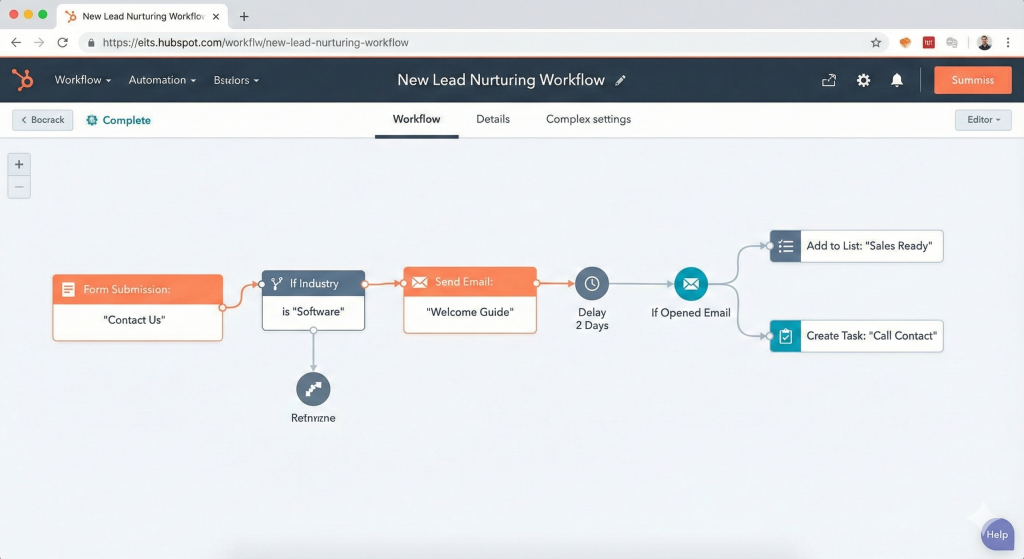
How I’d Execute It: The “AI Content Engine” Setup
Most marketers buy these tools and keep them siloed. I connect them to build a self-driving content machine.
Here is my exact “Create-to-Convert” workflow:
1. The Generator: Jasper AI Don’t write emails from scratch. Feed your product updates or webinar transcripts into Jasper.
- Action: Use the “Content Remix” feature to turn one source document into a 5-email nurturing sequence and 3 LinkedIn posts.
- Output: 8 pieces of content in 10 minutes.
2. The Orchestrator: HubSpot Marketing Hub Take those 5 emails and load them into a HubSpot Workflow.
- The Setup: Set the trigger as “Downloaded eBook.”
- The Logic: If they click a link in Email 2, move them to the “High Intent” list. If they don’t open Email 1, wait 3 days and resend with a new subject line.
3. The Connector: Zapier HubSpot is great, but it doesn’t see everything. Use Zapier to bridge the gaps.
- The Hack: Create a Zap: “When a lead reaches ‘Sales Ready’ status in HubSpot” → “Send a Slack notification to the Sales Channel.”
- Why: This ensures your sales team contacts the hottest leads instantly, while the AI handles the rest.
Pricing and Subscription Models
Comparison Grid: AI Tools for Marketing Automation (2025)
| Tool | Best For | AI Strengths | Automation Strengths | Typical Limits | Starting Price (as cited) |
|---|---|---|---|---|---|
| HubSpot Marketing Hub | All-in-one inbound + lifecycle automation | AI content assistant, predictive lead scoring, smart content personalization | Lead nurturing workflows, CRM-linked journeys, cross-channel coordination | Costs scale with contacts/features; advanced AI may be higher-tier | $18/mo (Starter) |
| Brevo | Email + SMS + CRM automation for SMBs | Send-time optimization, AI copy support, segmentation insights | Behavior-triggered sequences, multi-channel messaging, CRM-driven workflows | Free plan limits; pricing tied to volume/features | $25/mo (paid plans) |
| Jasper AI | Marketing content production at scale | Brand voice, long-form content generation, campaign copy variations | Not a full automation suite; pairs best with ESP/CRM tools | Workflow automation depends on integrations, not native features | $49/mo (Creator) |
| Zapier | Connecting tools and automating ops workflows | AI-assisted workflow suggestions, faster setup for common automations | App-to-app automation, conditional logic, data routing across stacks | Complex flows can increase task usage; advanced logic may require paid tiers | Varies by plan |
Comparison of pricing plans
AI marketing automation platforms offer pricing tiers tailored to business sizes and needs:
- HubSpot Marketing Hub: Starter plan begins at $18 per month
- Brevo: Paid plans start at $25 per month
- Jasper AI: Creator plan starts at $49 per month
Free trials and freemium options
Many AI marketing tools provide free entry-level plans or trial periods to help users evaluate features.
- Brevo offers a free plan with limited features
- HubSpot provides free CRM tools with basic marketing features
- Most platforms offer 14–30 day trials for premium features
Hidden costs and add-ons
Businesses should evaluate potential extra costs when selecting AI marketing tools:
- User seat licenses that scale with team size
- Contact or subscriber limits tied to pricing tiers
- API usage fees for integrations
- Advanced AI features available only in premium plans
Practical Insight: Choose One “System of Record” Before You Add More AI Tools
A common marketing automation mistake is stacking multiple AI tools without a clear system of record for contacts, lifecycle stages, and attribution. When different tools each store their own “version” of customer data, personalization becomes inconsistent and reporting becomes unreliable.
In practice, teams get better ROI by selecting one primary platform to own contact and journey logic (often a CRM-linked automation hub), then adding specialized tools only where they clearly improve throughput—such as content generation, workflow connections, or channel-specific optimization.
If you define the system of record first, AI features become additive rather than duplicative—leading to cleaner segmentation, more stable automation, and more credible ROI measurement over time.
Use Cases and Examples
Improving lead generation with AI
AI marketing tools help identify and qualify potential customers more efficiently.
- Automated lead scoring using behavioral data
- AI chatbots that qualify leads in real time
- Predictive analytics for high-conversion opportunities
- Personalized content delivery based on interests
Enhancing customer engagement through personalization
AI supports large-scale personalization across digital channels.
- Dynamic website content that reacts to user behavior
- Personalized email campaigns with tailored recommendations
- Custom product suggestions based on purchase history
- Automated follow-ups aligned with customer journey stages
Optimizing marketing campaigns for better ROI
AI continuously analyzes campaign data to maximize performance.
- Automated budget allocation to effective channels
- Real-time ad optimization
- Content performance prediction before publishing
- Multi-variant testing with automatic winner selection
Future Trends in AI Marketing Automation
The evolving role of AI in marketing
AI continues to transform marketing operations, enabling smarter, more adaptive systems.
- Deeper integration of AI across marketing stacks
- Increased autonomy in campaign management
- Enhanced predictive capabilities for proactive strategies
- Ethical AI frameworks guiding responsible use
Emerging AI technologies for marketers
New AI capabilities, including LLM-based tools, offer improved content generation and personalization.
- Multimodal AI for text, images, and video
- Voice search optimization for conversational marketing
- Augmented reality integration
- Emotion AI for sentiment analysis

Editor’s Summary
AI-powered marketing automation in 2025 is less about replacing marketers and more about removing operational friction: faster content production, smarter segmentation, and continuous optimization based on real-time signals. The strongest results typically come from combining a dependable automation backbone with focused AI capabilities that improve speed and decision quality.
This guide shows that platforms differ in what they optimize for. HubSpot is built for end-to-end lifecycle automation, Brevo fits practical email and SMS workflows for growing teams, Jasper accelerates marketing content creation, and Zapier connects tools into scalable processes. The best choice depends on whether your priority is system-wide orchestration, channel execution, content velocity, or integration across your stack.
Teams that treat AI tools as a structured operating layer—anchored by clear ownership of customer data and measurable KPIs—are better positioned to improve performance without increasing complexity.