
AI Video Generator for YouTube
Introduction: The Rise of AI Video for YouTube
AI video generators have emerged as powerful tools that transform text, images, and audio into fully-produced videos with minimal human intervention. These platforms leverage artificial intelligence to automate traditionally time-consuming aspects of video creation, from script conversion to visual assembly and voiceovers.
YouTubers are increasingly turning to AI video generators to maintain consistent upload schedules, repurpose existing content, and compete in the platform’s algorithm-driven environment. The technology helps creators overcome production bottlenecks while focusing on strategy and creative direction rather than technical execution.
These systems typically work by analyzing text inputs, generating or selecting appropriate visuals, adding AI-narrated voiceovers, and assembling these elements into a cohesive video according to predefined templates or styles.
My Take: AI video generators represent a significant shift in content creation, democratizing video production for creators without technical expertise. Market consensus indicates these tools are particularly valuable for channels requiring frequent uploads and educational content, though they currently complement rather than replace traditional video production for premium content.
Core Features of AI Video Generators for YouTube
Text-to-Video and Script Conversion
The foundation of AI video generation is the ability to transform written content into visual presentations. These platforms can process scripts, blog posts, or even bullet points and convert them into structured video content, maintaining the narrative flow while adding appropriate visual elements.
AI Voiceovers and Narration
Modern AI generators offer remarkably natural-sounding synthetic voices across various languages and accents. This eliminates the need for voice recording equipment or hiring professional voice talent, allowing creators to produce narrated content efficiently.
Stock Media Libraries and Visuals
Access to extensive libraries of stock footage, images, and music is a standard feature, enabling users to enrich their videos with professional visuals without copyright concerns. Many platforms include millions of royalty-free assets that can be automatically matched to script content.
AI Avatars and Presenters
For creators who prefer not to appear on camera, AI avatars provide a solution. These digital presenters can deliver content with appropriate facial expressions and gestures, creating a personal connection without requiring the creator to film themselves.
Automatic Subtitles and Captions
Accessibility features like automatic subtitle generation enhance viewer engagement while improving SEO performance. These systems can accurately transcribe narration and dialog, with options for customizing caption style and placement.
My Take: The feature sets of leading AI video generators have matured significantly, with text-to-video conversion and AI voiceovers showing the most impressive advancement. Users typically report that stock media integration and automatic captioning provide substantial time savings, though AI avatars remain an area where the technology still exhibits noticeable limitations in natural movement and expression.
Streamlining Your YouTube Workflow with AI
AI video generators excel at enabling rapid content creation for consistent uploads, helping creators maintain the regular posting schedule that YouTube’s algorithm rewards. By reducing production time from days to hours or even minutes, these tools allow creators to focus on ideation and audience engagement.
One of the most powerful applications is repurposing existing content. Blog posts, podcasts, and long-form articles can be transformed into engaging video summaries, extending the reach of original material across different formats and audience preferences.
For educational channels, AI generators streamline the production of explainer videos and tutorials. Complex concepts can be broken down with appropriate visuals automatically matched to narration points, creating clear and engaging instructional content.
Marketing teams leverage these tools to create promotional content for product launches, announcements, and campaigns. The ability to quickly produce and iterate on video ads helps optimize marketing performance while reducing production costs.
My Take: The workflow benefits of AI video generators are most pronounced for creators managing multiple channels or requiring high-volume output. These tools are transforming content strategies by enabling true omnichannel approaches, where a single piece of content can be efficiently adapted across platforms. The market consensus suggests that while the initial learning curve exists, most users experience significant time savings after the first few projects.
Who Benefits Most from AI Video Generators?
Individual content creators and YouTubers with limited resources or technical skills find these tools particularly valuable. They enable solo creators to produce professional-looking content without a production team, leveling the playing field against larger channels.
Small businesses and marketing teams use AI video generators to maintain a consistent YouTube presence without dedicated video staff. The cost-effectiveness and rapid turnaround make regular video marketing accessible even with modest budgets.
Educators and e-learning professionals leverage these platforms to transform lesson plans and course materials into engaging video lectures. The ability to quickly update content when information changes is especially valuable in educational contexts.
Anyone needing quick, scalable video production benefits from these tools, including news summarizers, product reviewers, and content aggregators who need to produce timely videos responding to current events or trends.
My Take: The democratization effect of AI video generators is most pronounced for creators who previously found video production prohibitively expensive or technically challenging. Market data suggests these tools have enabled a new category of YouTube creators who focus on information delivery rather than production values. For established channels with existing production capabilities, these tools serve more as supplementary resources for specific content types.
Choosing the Right AI Video Generator: Key Considerations
When selecting an AI video generator for YouTube content, creators should evaluate several platforms based on their specific needs. Popular options like InVideo AI, Pictory, and HeyGen offer different strengths in terms of template variety, customization options, and output quality.
The balance between customization and ease of use varies significantly across platforms. Some tools prioritize simplicity with guided workflows and limited options, while others offer extensive creative control at the cost of a steeper learning curve.
Output quality remains a critical differentiator, particularly regarding visual coherence and voice naturalness. The most advanced platforms produce results approaching professionally-produced videos, while others may exhibit inconsistencies in visual flow or voice inflection.
Integration capabilities with YouTube and other tools in a creator’s workflow can significantly impact efficiency. Direct publishing options, aspect ratio adjustments for YouTube requirements, and compatibility with editing software should be considered in the selection process.
My Take: The platform selection should be driven primarily by the specific content type and production volume requirements. Users typically report that InVideo and Pictory excel for text-to-video conversion and repurposing content, while HeyGen offers superior AI avatar capabilities. For creators prioritizing workflow integration, Descript’s combination of audio editing and video generation provides unique advantages for podcast-to-video conversion.
Limitations and Trade-offs of AI-Generated YouTube Videos
Despite their advantages, AI video generators can sometimes produce content that feels generic or lacks distinctive creative elements. The reliance on templates and stock media can result in videos that don’t fully capture a brand’s unique voice or aesthetic.
The relationship between creative control and automation represents a fundamental trade-off. While these tools streamline production, they may limit the nuanced creative decisions that distinguish memorable content from forgettable material.
Ethical considerations around AI transparency are increasingly important. Viewers may have expectations about knowing when content is AI-generated, particularly when AI avatars or synthetic voices are used to represent real people or organizations.
Human touch remains essential for certain content types, particularly those requiring emotional connection, complex storytelling, or authentic personality. AI tools excel at informational content but may struggle with videos meant to inspire, entertain, or form deep audience connections.
My Take: The limitations of AI-generated videos are most apparent in highly competitive niches where distinctive style serves as a competitive advantage. Market analysis suggests viewers are increasingly able to identify AI-generated content, though acceptance varies by audience demographic. For optimal results, successful creators typically use these tools as part of a hybrid approach, combining AI efficiency with strategic human intervention at key points in the production process.
The Future of AI in YouTube Content Creation
Emerging trends in AI video generation point toward increasingly sophisticated visual synthesis capabilities, with recent advancements enabling longer, more coherent video sequences generated directly from text descriptions. This suggests a future where creators might simply describe the video they envision and have it automatically produced.
The role of creators is evolving from hands-on production to strategic direction and quality control. As AI handles more technical aspects, successful YouTubers will likely focus more on concept development, audience insights, and distribution strategy rather than execution details.
Balancing AI efficiency with authentic engagement represents the central challenge for the future of YouTube content. As viewers become more sophisticated about recognizing AI-generated material, creators will need to thoughtfully integrate these tools while maintaining the authentic connection that drives channel loyalty.
My Take: The trajectory of AI video generation technology suggests we’re approaching a significant inflection point where quality and customization will reach levels indistinguishable from human-produced content for many applications. Industry trends indicate that within 1-2 years, the primary limitation will shift from technical capabilities to strategic implementation. Creators who develop expertise in prompt engineering and AI direction rather than traditional production skills may gain competitive advantages.
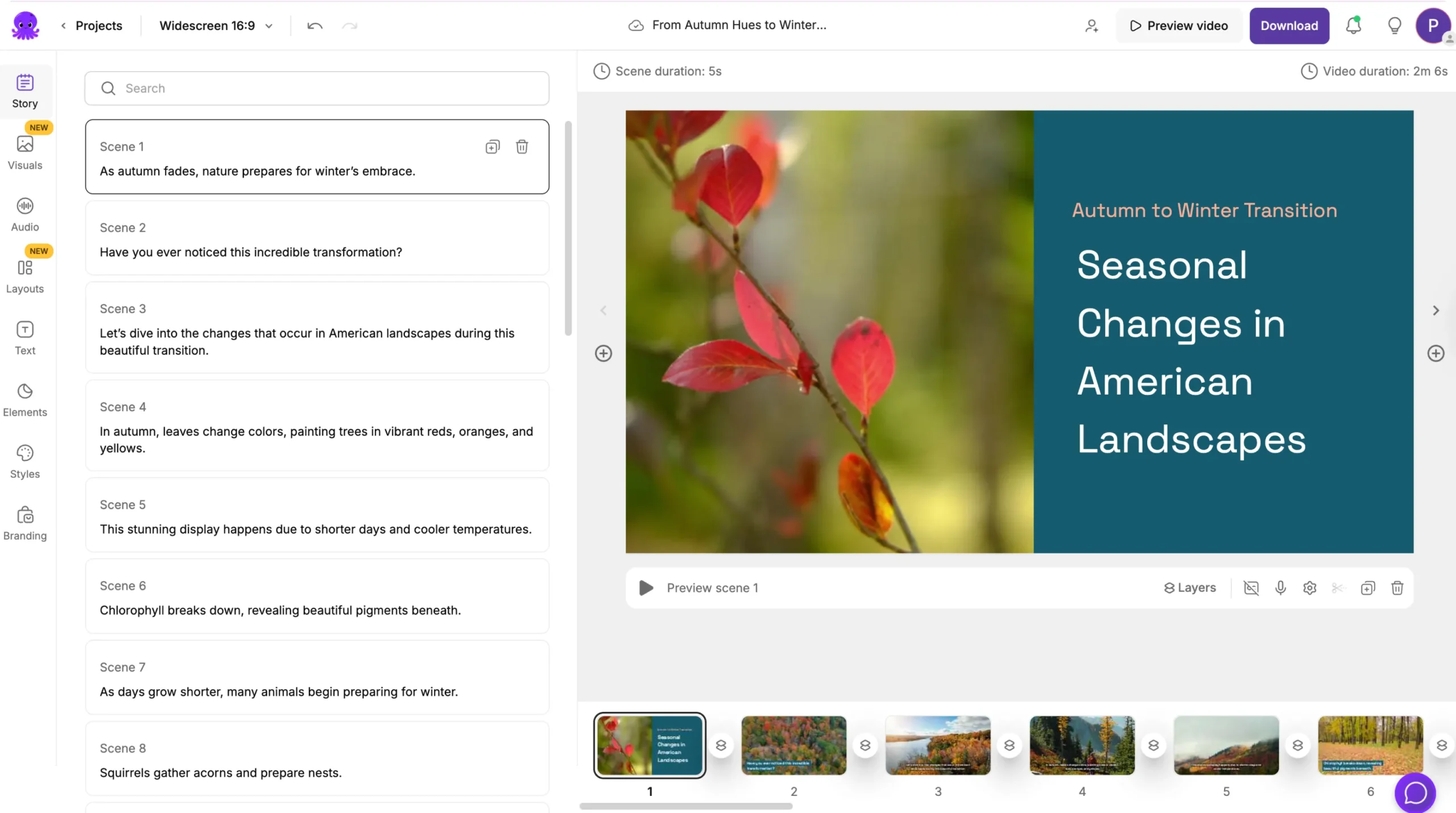
How I’d Use It: The “Blog-to-Video” Pipeline
Instead of trying to create a cinematic vlog with AI, I would strictly use these tools for “Content Repurposing.”
If I were running a faceless YouTube channel, my workflow would be:
-
Script Input: I would take an existing blog post and paste the URL directly into a tool like InVideo or Pictory.
-
Stock Media Filtering: AI tends to choose generic clips, so I would manually replace at least 30% of the visuals to match the specific tone of my script.
-
Voiceover Adjustment: I would create a custom AI voice clone (using ElevenLabs or built-in features) rather than using the default robotic voices to increase viewer retention.
Bottom line: I see these tools as a “rough draft generator” that does 80% of the heavy lifting, leaving me to focus on the final 20% of creative polish.
Conclusion: Empowering Your YouTube Strategy with AI
AI video generators offer compelling benefits for YouTube creators, including dramatically reduced production time, consistent output quality, and the ability to scale content creation without proportional resource increases. These tools are particularly valuable for educational, informational, and marketing content where clear communication takes precedence over artistic expression.
As the technology continues to evolve, the strategic integration of AI tools into broader content workflows represents the most promising approach. Rather than viewing AI as a replacement for human creativity, successful creators are finding the optimal balance between automation and personal touch, leveraging technology for efficiency while preserving the authentic elements that build audience connection.
Pricing Plans
Below is the current pricing overview for the tools mentioned above:
- InVideo AI: $28/mo, Free Plan Available
- Pictory: $19/mo, No Free Plan
- HeyGen: $29/mo, Free Plan Available
- Synthesys AI: Contact Sales / Custom Pricing, Free Plan Available
- Descript: $16/mo, Free Plan Available
- Canva: Contact Sales / Custom Pricing, Free Plan Available
Value for Money
When evaluating value proposition, Descript stands out for creators who need both audio editing and video generation capabilities. Its integrated approach eliminates the need for multiple subscriptions, making it particularly cost-effective for podcast repurposing and content with substantial voice-over requirements.
For pure video generation, Pictory offers strong value despite lacking a free tier. Its specialized focus on transforming text to video results in higher quality output for this specific use case compared to more general-purpose alternatives. Meanwhile, InVideo and HeyGen balance feature depth with reasonable entry points, with HeyGen particularly excelling for those requiring AI avatars and presenters.
Free plans from Canva and Synthesys provide good starting points for occasional users or those testing the waters, though they typically come with output limitations or watermarks that necessitate upgrading for professional use. The ideal value proposition ultimately depends on content volume, specific feature requirements, and whether the tool will serve as a primary production system or supplement existing workflows.
Editor’s Summary
AI video generators for YouTube now provide robust text-to-video, voiceover, and workflow tools that cut production time and lower technical barriers, especially for educational, informational, and marketing content. The article compares leading platforms, pricing, and value, outlines where automation works best, and stresses that long-term success depends on pairing AI efficiency with human-led strategy, brand voice, and audience engagement.